
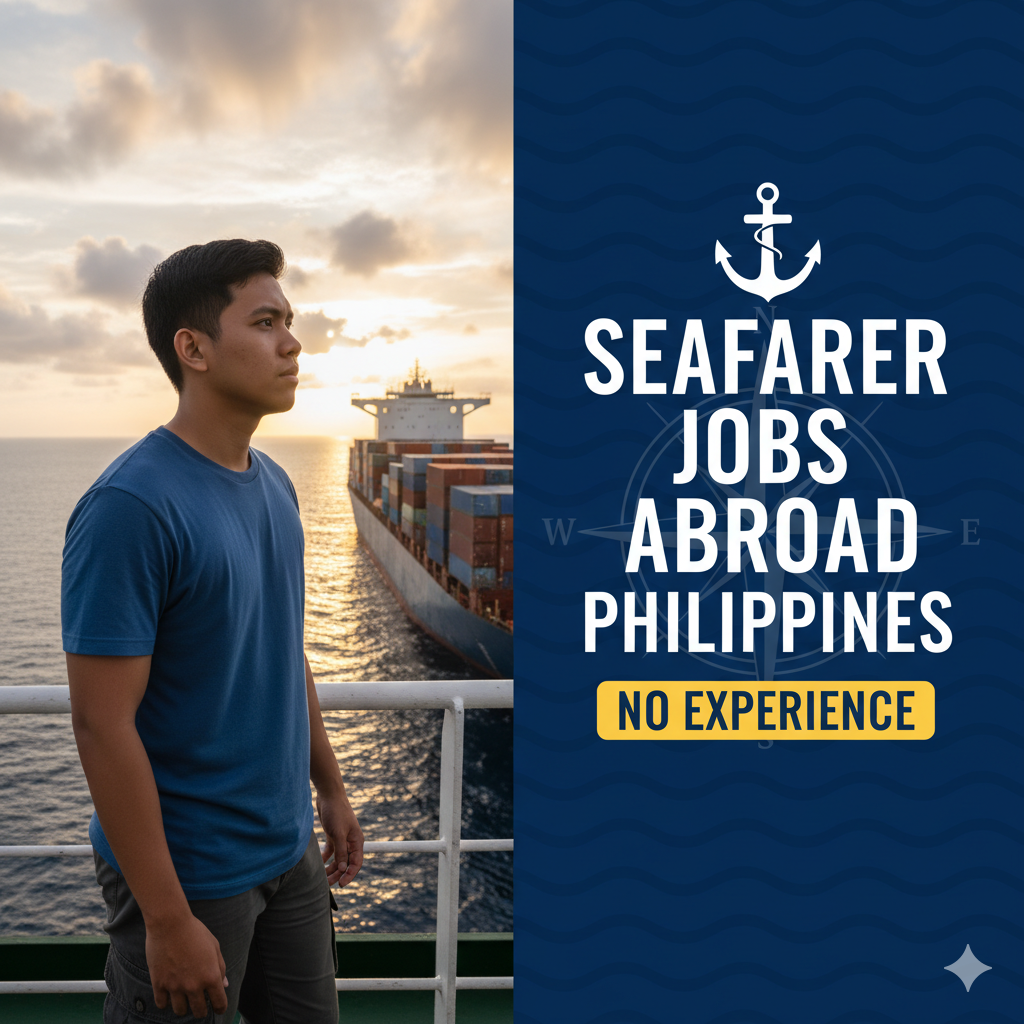
Seafarer Jobs Abroad Philippines No Experience: A Practical Guide for First-Time Applicants
Finding seafarer jobs abroad from the Philippines with no experience may sound difficult, but it’s not impossible. In fact, the maritime industry continues to open doors for aspiring Filipino seafarers, especially as global shipping lines deal with increasing demand and crew shortages.
This article outlines the real opportunities, updated qualifications, and exact steps to land entry-level seafarer positions even if you’re just starting out. If you’re fresh out of maritime school or switching careers, this guide gives you a clear path forward.
Why Seafarer Jobs Remain a Top Career Choice in the Philippines
The Philippines supplies over 25% of the world’s seafarers. Filipino workers are highly regarded for their discipline, resilience, and maritime training. For those without experience, starting out as a deck cadet, engine cadet, or messman can lead to long-term careers with good pay and international travel.
Whether you’re aiming for a long-term role in shipping or just want to work abroad and earn in foreign currency, the seafarer industry remains one of the best-paying jobs for Filipinos abroad—even at entry-level.
Can You Get Hired as a Seafarer with No Experience?
Yes. Many manning agencies in the Philippines hire cadets and trainees for international vessels. What matters most is completing the required training, having valid documents, and applying through licensed agencies.
Most companies are willing to train entry-level hires as long as they show potential and discipline. There’s high demand for entry-level seafarer jobs, especially in cargo, tanker, and bulk vessels.
Requirements for Seafarer Jobs Abroad with No Experience
If you’re aiming to qualify for seafarer jobs abroad from the Philippines without prior experience, here’s what you need:
1. Basic STCW Training
Complete the Standards of Training, Certification and Watchkeeping (STCW) basic safety course.
Includes Fire Prevention, Personal Survival Techniques, First Aid, and Personal Safety.
2. Seafarer’s Identification and Record Book (SIRB)
Commonly known as the Seaman’s Book.
Issued by the Maritime Industry Authority (MARINA).
3. Valid Passport and Medical Certificate
Medical must be from a DOH-accredited clinic, following PEME standards.
4. High School Diploma or Maritime Course Certificate
While not all entry-level roles require a degree, those who studied in maritime schools in the Philippines often have a better edge.
5. Apply Through Licensed Manning Agencies
Agencies handle your deployment and placement on foreign ships.
Check the list of POEA (now DMW) accredited manning agencies to avoid scams.
Entry-Level Seafarer Positions for Applicants With No Experience
Here are some seafarer jobs abroad for Filipinos with no experience that you can apply for:
● Deck Cadet
Assists in navigation, safety checks, and cargo operations. Usually required to complete onboard training for officer licensing.
● Engine Cadet
Supports engine officers in maintaining machinery and systems.
● Messman
Handles cleaning, food service, and support in the galley. It’s often the easiest entry point to shipboard work.
● Ordinary Seaman (OS)
Assists deck officers with general tasks. Requires physical stamina and discipline.
● Wiper
An engine room assistant responsible for cleaning and basic maintenance.
Each of these roles gives you a starting point to build experience and climb the maritime career ladder.
Top Countries Hiring Filipino Seafarers
The following countries and companies commonly hire Filipino seafarers for overseas deployment:
Japan – Known for training programs for engine and deck cadets.
Greece – Tanker and cargo vessels often recruit from Philippine agencies.
Germany – Especially for cruise ships and bulk carriers.
Singapore & Hong Kong – Regional shipping hubs with growing demand.
Panama & Marshall Islands (via ship owners) – International fleets using Filipino crew.
Tips for First-Time Seafarers Applying Abroad
Complete all certifications first. Don’t apply without your STCW and SIRB.
Start with reputable maritime schools. Institutions like PMMA, MAAP, and UMTC are recognized by top agencies.
Be prepared for apprenticeship. Most first-timers go through onboard training for 6–12 months.
Be patient. Deployment can take time—build a professional resume and follow up with agencies regularly.
Don’t pay under-the-table fees. Stick to licensed manning agencies that follow DMW rules.
Related Keywords for Better Visibility
To ensure strong visibility across search engines, this article naturally includes related search terms such as:
entry level seafarer jobs Philippines
how to become a seafarer with no experience
Philippine manning agencies for cadets
seaman jobs hiring no experience 2026
requirements for seaman in the Philippines
These related keywords help search engines associate this content with high-interest queries.
FAQs – Seafarer Jobs Abroad Philippines No Experience
1. Can I apply as a seafarer without maritime education?
Yes, but your chances improve significantly if you complete at least a short maritime training course or hold a maritime-related certificate.
2. How much is the starting salary for entry-level seafarers?
Monthly salary ranges from $300 to $600 USD, depending on the vessel type and position.
3. How do I know if an agency is legit?
Check with the Department of Migrant Workers (DMW) or look up the agency’s license on their official site.
4. Is English fluency required?
Yes. Most ship communications are in English, so basic fluency is needed.
5. How long does it take to be deployed?
If your documents are complete and a vacancy matches your profile, deployment can happen within 2–6 months.
Final Thoughts
Getting into seafarer jobs abroad from the Philippines with no experience is absolutely possible—with the right certifications, patience, and guidance. Entry-level roles like messman, cadet, or ordinary seaman offer solid ground to start building your career at sea. Make sure to follow legal procedures, stay updated with manning agencies, and complete all mandatory training.
With consistent effort, you’ll not only get onboard but start earning and growing in one of the most respected global professions.